1. Define the use case before choosing products
An amenity kit can mean several different things. A hotel may need a guest comfort set for a room, spa or reception desk. A tour operator may need a welcome kit for coach tours, cruises or group holidays. A rail, ferry or airline operator may need a compact travel kit for a seat pocket or cabin bag. Promo agencies and brands may use the same format for staff travel, loyalty gifts or event packs.
Start with the moment when the traveller receives the kit. Is it handed out at check-in, placed in the room, sold in a shop, packed into a welcome envelope or supplied as part of a paid travel package? This decision affects the pouch, the label, the perceived value and the level of product information required.
For retail and online sellers, the kit must also work on a product page. You need clear photos, a barcode, batch details, multilingual descriptions and a repeatable bill of materials. For hotels and transport companies, speed of handout, carton handling and replacement stock are often more important than retail display.
2. Choose the amenity kit contents by traveller type
The phrase amenity kit contents sounds simple, but it is where many projects become too broad. A useful kit has a clear traveller profile. A business traveller needs different items from a family guest, a spa customer or a long-distance coach passenger.
Common kit components include:
- sleep mask, foam or silicone earplugs and a small pouch;
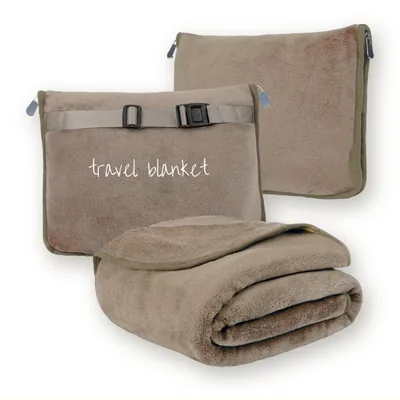
- neck pillow, travel blanket or compressed towel for higher-value sets;
- toothbrush, toothpaste, comb, shower cap or simple toiletry items where suitable;
- travel bottles, toiletry bag, wet pouch or cosmetic case;
- luggage tag, passport wallet, cable pouch or pen for branded travel sets;
- microfibre towel, poncho, folding umbrella or travel clothesline for tour operators;
- USB cable kit, luggage scale, adapter or power bank only where the compliance route is clear.
Keep the number of items under control. More components mean more artwork, more supplier documents, more cartons and more inspection points. If the kit is used by staff in a hotel chain or transport operation, ask the operations team what causes complaints: missing earplugs, poor pouch closure, hard-to-open packaging or cartons that do not fit storage areas.
VoyagiQ can build kits from our travel-accessory categories, including sleep masks and earplugs, neck pillows, toiletry bags, luggage tags, travel tech and other essentials. For products outside the catalogue, we use our custom sourcing process.
3. Select the pouch or outer packaging
The pouch is the item the user remembers. It also controls the cost, packing time and carton volume. For a hotel amenity kit, a simple kraft envelope, non-woven pouch or clear bag may be enough. For a paid upgrade or branded travel set, a reusable toiletry pouch, drawstring bag, PU wallet or zipped fabric pouch usually makes more sense.
Ask three questions before you choose the pack:
- Will the guest keep it, or is it a one-trip item?
- Does it need to stand on a shelf, hang on a hook or fit into a seat pocket?
- Do you need a barcode, retail card, multilingual label or only an internal article code?
Transparent pouches make contents visible and reduce questions from staff, but PVC and some clear plastics may require additional material checks under REACH rules. Fabric and PU pouches are better for perceived value, while kraft packaging suits simple reception or in-room use. If the kit will be shipped to several countries, leave enough label space for country-specific information.
4. Decide the branding level
Branding can be as small as a one-colour logo on a sleep mask or as complete as a private-label kit with custom pouch, insert card, EAN, carton marks and multilingual labels. For hotels and tour operators, the correct level depends on whether the kit supports the brand quietly or needs to act as a souvenir.
Typical branding options are:
- logo on the pouch, mask, tag or card;
- custom colour for selected textile or silicone items, subject to factory options;
- printed sleeve, belly band or insert card;
- own EAN and SKU structure for retail chains and online sellers;
- multilingual product labels for several EU markets;
- carton labels by property, route, warehouse or campaign.
Private label normally needs 300 pieces per model. A sample can be prepared in around 7–14 after artwork approval, depending on the materials and printing method. Samples are credited against the order. For repeat seasonal programmes, keep the artwork and bill of materials stable so reorders can move faster.
If you need a kit under your own brand, see our private label travel accessories service. If you want VoyagiQ to assemble the whole set to a specification, use our amenity kits page as the starting point.
5. Put compliance into the specification
A B2B buyer should not leave compliance until the goods arrive. In the EU, the General Product Safety Regulation applies to consumer products. A product needs an EU economic operator, product identification, batch or type reference, postal and e-mail contact details, and warnings in the language of the country of sale where needed. Online listings need the same type of information.
VoyagiQ acts as importer when we supply the goods on an EU invoice. We handle freight, customs and VAT in Poland and deliver across the EU, UK, Switzerland and Norway. We also request product documents from partner factories and check category-specific requirements before order release.
Important examples for amenity kits:
- PVC luggage tags, clear pouches and covers may require checks for restricted phthalates.
- Plastic and rubber parts with skin contact may be relevant for PAH requirements.
- PU, leather and textile items may need checks for DMF, Cr(VI) or textile fibre labelling, depending on the material.
- Earplugs sold with an SNR or hearing-protection claim may fall under PPE rules. Without that claim, they are usually positioned as sleep or travel comfort products.
- Power banks, Bluetooth trackers, adapters and USB products need a separate compliance path. For power banks, transport documents such as UN38.3 and SDS are also relevant.
- Packaging EPR can apply in the countries where you sell or distribute the kits.
Avoid claims such as “airline approved” for power banks. A practical and safer approach is to state the capacity in Wh on the case and keep the capacity under 100 Wh where that is the selected specification.
6. Build a clear buying specification
Your written specification should allow every supplier and every internal department to understand the same kit. Do not rely on a photo with the note “similar”. List each component, material, colour, size, branding position, packaging and document requirement.
| Specification point | What to write down | Why it matters |
|---|---|---|
| Kit purpose | Room gift, coach pack, airline-style kit, retail SKU or promo set | Controls pouch choice and labelling |
| Contents | Exact item list and any alternatives allowed | Prevents substitutions at production stage |
| Branding | Logo file, colours, print method and position | Needed for sampling and inspection |
| Markets | Countries of sale or use | Defines languages, EPR and listing data |
| Packing | Units per carton, inner bags, route or hotel labels | Affects warehouse and transport handling |
| Dates | Sample approval, production release and delivery window | Protects launch and travel seasons |
For hotels, add the number of properties, delivery addresses and whether goods are split by hotel. For tour operators, add the travel season, passenger volumes by departure month and whether kits are issued by office, guide, coach company or ship. For shops and online sellers, add product page requirements, EANs and carton quantities for fulfilment.
7. Plan sampling, production and delivery
Amenity kits involve several components, so the critical path is often artwork approval and component availability, not only production time. After we receive a clear brief, we prepare a written offer within 2 working days. Production normally takes 25–45 production days after deposit, artwork approval and sample sign-off. The usual order-to-warehouse lead time is around 8–12 weeks, with rail or sea transport to Poland taking around 25–45. Air freight can be used for urgent or lighter goods and takes around 7–12, but it is not always suitable for every product.
Hotels and tour operators often buy between February and April. Retail chains usually plan summer ranges earlier, often in September to November, then confirm in January or February so goods can land before the season. Promo agencies should also work backwards from event dates, especially for Christmas gifting and spring travel campaigns.
For payment, the typical structure is a deposit of 30–50 %, with the balance before shipment. Deferred terms are only for repeat clients with a credit limit. If you need split deliveries, route-specific cartons or property-level packing, include that in the quotation stage rather than after production.
8. Inspect the kit as a set, not only as separate items
Quality control for an amenity kit should check both the components and the final assembly. A sleep mask may be fine by itself, but the kit can still fail if the mask is missing, the pouch print is off-centre, the insert card has the wrong language or the carton label sends the stock to the wrong property.
A practical inspection plan covers:
- quantity and assortment against the approved bill of materials;
- workmanship of each item, including stitching, zips, closures and print;
- branding position and colour against the approved sample;
- labels, warnings, importer details and batch references;
- barcode scan where EANs are used;
- carton marks, inner packing and master carton condition.
Keep one approved sample as the reference for production and inspection. If the kit includes travel tech, locks, adapters or power banks, the document checklist must be closed before shipment. If a supplier document exists, we request it and share the relevant report or declaration with the order file.
9. Choose the right amenity kit supplier model
There are three common ways to buy kits. You can assemble stock items yourself, buy a standard kit from a distributor, or work with an amenity kit supplier that manages sourcing, private label, import and compliance. The cheapest route on paper is not always the lowest-risk route when several components, labels and countries are involved.
VoyagiQ is B2B only. We supply travel shops, luggage shops, airport retail, online sellers, brands, retail chains, promo agencies, hotels, tour operators and distributors. Our range covers 440+ luggage and travel-accessory products, and we can combine catalogue items with sourced components for a complete kit. You receive an EU invoice from EnjoyGroup Sp. z o.o. in Poland, with import handled before delivery.
For a fast quotation, send the target kit contents, quantity, branding needs, countries of use, delivery address and required date. If you already have a reference photo or previous kit, include it, but add the details you want to change. That gives us enough information to return a comparable offer rather than a vague estimate.