1. Start with the sales channel, not the pillow
A neck pillow for an airport shop is not the same product as a neck pillow for a hotel welcome kit or a branded corporate gift. Before comparing foam density, valves or hoods, define where the item will be sold, how it will be displayed and how quickly it must move.
For travel accessory shops and luggage stores, the range usually needs visible choice: a compact inflatable model, a softer memory foam neck pillow, and possibly a set with mask and earplugs. Online sellers need clear product variation, strong packaging images and stable repeat supply. Brands and retail chains often need private-label packaging, EAN codes and multilingual labels. Promo agencies and corporate buyers care about logo area, pack size and delivery date. Hotels, tour operators and rail or coach operators often need a practical kit item at controlled cost.
If you are building a neck pillow wholesale range, avoid choosing only by the lowest piece price. A cheaper pillow that is too bulky, poorly packed or difficult to explain online may cost more after freight, returns and markdowns.
2. Compare the three main constructions
Most B2B neck pillow ranges are built around three types: memory foam, inflatable and hooded. Each has a different commercial role. The right answer is often a small range, not one universal model.
| Type | Commercial use | Buyer notes |
|---|---|---|
| Memory foam | Travel retail, luggage shops, online stores, branded gifts | Higher perceived value, larger cartons, more attention to cover fabric and packaging |
| Inflatable | Budget travel ranges, compact kits, tour operators, promo | Low packed volume, valve quality is critical, needs clear use instructions |
| Hooded | Airport retail, online novelty ranges, privacy-focused travel kits | More fabric and stitching checks, stronger shelf story, bulkier packaging |
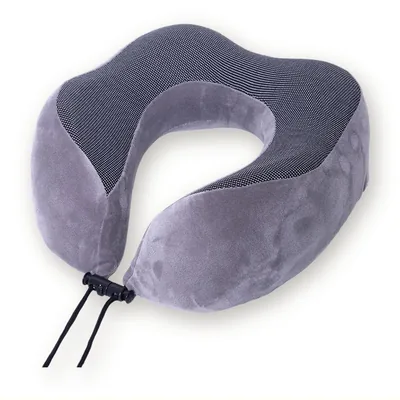
A memory foam neck pillow suits ranges where comfort, touch and giftability matter. It gives a fuller hand feel and can be packed in a pouch, box or colour sleeve. It is less space-efficient than inflatable models, so carton volume and freight must be part of the quote comparison.
Inflatable pillows suit customers who want a light, packable item. They can work well for airlines, coach operators, tour organisers, budget travel packs and promotional campaigns. The risk is not the concept, but execution: weak seams, stiff valves and confusing folding instructions create complaints.
Hooded pillows add privacy and light blocking. They are useful when the range needs a visible point of difference, especially online or in airport retail. They need more careful sampling because hood fabric, stitching, drawcords and washing instructions all affect the customer experience.
3. Specify materials before asking for prices
Professional buyers should send one specification to every travel pillow supplier. If the brief is vague, the quotes will look comparable but the products will not be comparable.
For foam pillows, ask for the filling type, cover fabric, removable cover or fixed cover, zip position, inner liner, pouch type and packaging. For inflatable pillows, specify the outer surface, internal bladder, valve style, folded size and repair or instruction insert if required. For hooded models, add hood fabric, closure, logo position and any mask or earplug set.
Useful specifications include:
- Target retail price or target landed cost.
- Product type: memory foam, inflatable, microbead, hooded or set.
- Outer fabric and colour references.
- Packaging: polybag, pouch, kraft box, colour box, belly band or hang card.
- Logo method: woven label, printed pouch, heat transfer, embroidery or box print.
- Language requirements for labels, warnings and instructions.
- Sales countries, because labelling and EPR duties differ by market.
VoyagiQ can quote products from the neck pillows and travel blankets category, or source a model to match your target pack size and price point.
4. Build a range that covers margin and display space
A practical retailer range is usually easier to sell than a single pillow. The aim is to create clear price steps and reasons to trade up. Do not add too many near-identical shapes; the customer should understand the difference in a few seconds.
For a luggage shop or travel accessory store, a compact three-part range can work well:
- Entry: inflatable neck pillow in a pouch or small box.
- Core: memory foam model with washable cover and travel pouch.
- Feature: hooded model, pillow and blanket set, or set with sleep mask and earplugs.
For online sellers, the range can be narrower but the content must be stronger. Check that product photos can show the compressed size, neck support, closure, pouch and packaging. For marketplaces, make sure the exact importer details, batch information and warnings can be reflected in listings where required by GPSR.
For hotels and tour operators, simplicity matters. A pillow may be part of a sleep kit, welcome kit or coach travel pack. In this case, the packaging should be compact and easy to distribute. See also sleep masks and earplugs if you are combining items into a small travel comfort offer.
5. Decide what should carry the brand
Branding does not always have to be on the pillow itself. For small and medium runs, the most cost-effective branding may be on the pouch, belly band, colour box or insert card. A visible woven label on the pillow can look neat, but it affects the sewing process and may require a higher minimum.
Private label buyers should decide whether the product is a retail SKU, a promotional gift or part of a wider luggage and travel range. A retail SKU normally needs EAN, product name, importer data, multilingual information and consistent packaging dimensions. A promotional gift may need more focus on logo visibility and delivery date. A brand range needs colour control and repeatability across future orders.
VoyagiQ supports private label travel accessories with your logo, packaging, EAN and multilingual labels. Typical private-label production uses 300 pieces per model. Samples take 7–14, production is usually 25–45, and the total order-to-warehouse timing is 8–12, depending on product and route.
6. Check samples like a buyer, not like a traveller
A sample should be reviewed against the sales channel and the approved specification. Keep one approved sample as the reference for production and inspection. If several people in your team comment on the sample, record the decisions in writing before the order is placed.
For a memory foam model, check rebound, smell after airing, cover feel, zip quality, seam alignment, pouch size and whether the pillow fits back into the pouch easily. For inflatable models, inflate and leave overnight, then deflate and fold several times. Check valve comfort against the neck. For hooded pillows, pull the hood over the head and check whether fabric tension changes the pillow shape.
Sample checks should include:
- Product weight and packed dimensions versus the quote.
- Stitching, loose threads, stains and colour difference.
- Logo size, position and print clarity.
- Packaging strength for parcel shipment or retail display.
- Label content, country languages and batch identification.
- Carton size, quantity per carton and gross weight.
Samples are credited against the order. If the deadline is tight, air freight for samples or urgent goods can take 7–12, while regular rail or sea transit to Poland is typically 25–45.
7. Do not ignore compliance and labelling
Neck pillows are consumer products, so EU rules still apply even when the item is soft, simple and low voltage-free. Under GPSR (EU) 2023/988, products need an EU economic operator, name, postal and e-mail address on the product or packaging, type or batch identification, and warnings in the language of the country of sale. The same core information should be available in online listings.
Material rules also matter. Textile fibre labelling may apply to fabric covers. REACH can be relevant to skin-contact materials, prints, PU parts, PVC pouches or plastic accessories. For example, phthalates are relevant for PVC components, PAH can be relevant for some plastic or rubber parts, DMF for PU and Cr(VI) for leather details. We order lab tests where the material and claim require them, and you see the report if it exists.
If a neck pillow is sold as part of a kit with earplugs, be careful with claims. Earplugs sold with an SNR or hearing-protection claim are PPE under Regulation (EU) 2016/425 and need suitable documentation. Without such a claim, they are usually positioned as sleep or travel comfort items. Our quality and compliance page explains how we handle product checks by category.
8. Calculate landed cost, not only unit price
Neck pillows can be deceptively expensive to ship because of volume. Memory foam and hooded models fill cartons quickly. Inflatable models are much more compact, but if packaging is oversized, the freight advantage disappears. Ask for carton dimensions before approving a product.
When comparing quotes, include:
- Unit price and factory MOQ shown for the item.
- Private-label minimum if you need custom branding.
- Packaging cost and artwork cost.
- Carton quantity, gross weight and cubic metres.
- Freight, customs duty, import VAT and delivery to your warehouse.
- Inspection, testing or document costs where required.
VoyagiQ acts as the EU importer for the goods we sell. We handle freight, customs and VAT in Poland, then deliver across the EU, UK, Switzerland and Norway. You receive an EU company on the invoice and a delivered B2B offer rather than having to manage import formalities yourself.
9. Plan timing around travel and gift seasons
Consumer travel accessory sales usually rise from May to August, with additional peaks around Easter, October half-term and December gifting. Chains often plan the next summer range in September to November and confirm in January or February, so goods can land in March or April. Private label by sea should usually be ordered from November to January for the summer season.
Independent shops and online sellers often reorder from February to June. Promo agencies buy for spring events from March to June and for Christmas gifts from August to October. Hotels and tour operators usually buy from February to April. If your neck pillow is part of a wider kit, the slowest component sets the schedule.
For a written offer, send your target product, quantity, branding needs, delivery country and packaging preference. We usually return a quote within 2. You can start from our 440+ product catalogue or ask for sourcing if the model is not listed. To compare options, request a B2B quote with your planned quantity and sales channel.