Why TSA wording matters in B2B buying
For travel shops, luggage stores, airport retail, online sellers and private-label brands, a lock is a small product with a high claim risk. The words on the pack can be more important than the lock body itself. Customers recognise “TSA lock” as a useful travel feature, especially on suitcases, cable locks and combination padlocks. That demand creates pressure to print the phrase on packaging, web listings and hangtags.
The problem is that TSA-style wording and symbols are not just generic decoration. A lock sold as suitable for airport security opening needs a licensed mechanism, normally under Travel Sentry or Safe Skies. If the factory cannot show that the mechanism is covered, the safer retail description is usually “combination lock”, “cable combination lock” or “luggage lock” without TSA wording or protected marks.
At VoyagiQ we buy factory-direct for European businesses and act as importer. For luggage locks and luggage with built-in locks, we only use TSA wording or marks where the manufacturer’s licence position has been checked for the order. Otherwise we keep the copy neutral.
1. Start with the product type
There are two common buying situations. The first is a separate retail lock: a small padlock, a cable lock, a mini combination lock or a fingerprint luggage lock sold on a blister card, box or hanging pack. The second is a built-in lock on a suitcase, travel bag or hard-shell luggage set. Both can be offered as private label, but both need the same basic check before “TSA” is printed.
Professional buyers should separate the product list into three groups:
- Licensed TSA-style products: the mechanism is covered by Travel Sentry or Safe Skies documentation, and the pack artwork follows the permitted use.
- Ordinary locks: the product locks the zip or clasp, but it is not sold with TSA wording or marks.
- Unclear claims: the supplier uses a red symbol, “TSA” phrase or airport-security claim, but cannot confirm the licence position.
The third group is where most risk sits. A low unit price is not useful if the retail pack has to be reprinted, the online listing has to be changed, or stock has to be withdrawn from a marketplace.
2. Know the names: TSA, Travel Sentry and Safe Skies
TSA is the United States Transportation Security Administration. It is a government agency, not a luggage-accessory brand. In retail language, however, “TSA lock” normally means a lock designed so authorised airport security staff can open and relock it with a special tool, instead of cutting it.
Travel Sentry is the system most European buyers recognise, often associated with the red diamond device. Safe Skies is another licensed system. The exact mark, keyway, packaging statement and artwork rules depend on the system and the licence. In practice, when a buyer asks for a tsa lock licence, the factory should be able to identify which system applies and what evidence is available for that model or mechanism.
Do not treat a symbol moulded into a sample as enough evidence. Samples move between showrooms, factories and trading companies. Ask for the model, mechanism reference and licence confirmation for the actual production order.
3. What may be printed on the pack
If the lock mechanism is licensed and the artwork is allowed, the retail pack may usually describe the function in a clear way. The wording should be practical and not overstate the benefit. Avoid phrases that make the product sound officially endorsed by an airline, airport or government body.
Typical permitted or safer wording depends on the licence holder’s rules, but professional pack copy often includes points such as:
- that the lock is a travel combination lock with a licensed airport-security opening mechanism;
- the licensed system name, if the licence allows it for that product and pack;
- the recognised mark, if the artwork file and placement are authorised;
- short instructions for setting the combination;
- the importer name, postal address and e-mail address required for EU sale.
For private-label projects, we prepare the pack around the confirmed claim. Your logo, EAN, multilingual labels and brand colours can be added, but the licensed mark and related wording should not be edited casually. A small design change can create a compliance problem if it changes the meaning of the claim.
4. What should not be printed without a licence
If the mechanism is not confirmed as licensed, do not print “TSA lock”, “Travel Sentry”, “Safe Skies”, the red diamond, a master-key symbol that imitates the licensed mark, or airport-security claims. Also avoid wording such as “airport approved”, “airline approved” or “official security lock”. These phrases are often too broad, and they can mislead customers about who has checked the product.
A safer non-licensed pack can still sell well if the product is useful and the copy is clear. For example:
- “3-dial combination luggage lock”;
- “resettable cable lock for bags and cases”;
- “mini padlock for luggage zips”;
- “combination lock for travel and storage”.
This is especially relevant for promo agencies, hotel guest shops, tour operators and corporate gifting. If the item is a giveaway, the buyer may not need a licensed airport-security mechanism. A neutral combination lock may be enough, with lower artwork risk.
5. Check the licence before you approve artwork
Artwork approval should come after the licence check, not before. The practical order is simple: choose the lock, confirm the mechanism, confirm the allowed wording, then design the pack. If the process is reversed, you may have attractive artwork that cannot be printed.
For tsa lock wholesale orders through VoyagiQ, we normally ask the manufacturer to confirm the licence position per order. We also check whether the pack, hangtag, instruction leaflet and online product title are consistent. If a product is not confirmed, we quote it as a standard lock.
A useful buyer checklist is:
- lock type and material;
- combination, cable, key, built-in or fingerprint function;
- mechanism reference and licensed system, if any;
- packaging format and print area;
- languages and countries of sale;
- EU importer details and batch identification;
- online listing title, bullet points and images.
Samples are available in 7–14, and samples are credited against the order. Private-label production is typically 25–45, with rail or sea transit to Poland around 25–45, or air freight around 7–12 for urgent small consignments. The usual order-to-warehouse planning window is 8–12.
6. Packaging and EU information still apply
A licensed mechanism does not replace EU product responsibilities. A luggage lock is a consumer product, so the General Product Safety Regulation applies. The product or packaging needs an EU economic operator, name, postal address and e-mail address, type or batch identification, and warnings or instructions in the language of the country of sale where needed. The same essential information should be reflected in online listings.
Material rules can also matter. Soft PVC hangers, coated cables, rubberised grips and plastic key covers may raise REACH questions such as phthalates or PAH limits. If the lock is built into a suitcase, the claim sits inside a wider product file covering the case, handle, wheels, lining, labels and packaging.
Packaging EPR is separate again. Germany, Poland, France and other markets have their own registration and reporting systems. If you sell cross-border, the same lock may need different national packaging obligations even when the physical product is identical.
| Item to check | Why it matters | Buyer action |
|---|---|---|
| Licensed mechanism | Supports TSA-style wording and marks | Ask for confirmation for the exact order |
| Pack wording | Prevents overclaiming | Approve only after the licence check |
| EU importer data | Required for consumer products | Include postal and e-mail address |
| Online listing | Marketplaces treat titles as claims | Use the same cautious wording as the pack |
7. Private label: where retailers usually make mistakes
The most common mistake is copying a retail pack found online and asking the factory to reproduce it with a new logo. That creates several risks: the mark may be licensed to another party, the wording may be wrong for Europe, and the instructions may not match the lock.
The better route is to build the pack from the approved specification. On private-label orders, VoyagiQ can prepare logo placement, EAN, multilingual labels and carton marks around the confirmed product. The typical private-label minimum is 300 per model. A written offer is prepared in 2 working days after we receive the product, quantity, branding and delivery requirements.
For retail chains and online sellers, it is also worth creating one internal naming rule. If the lock is licensed, use the agreed phrase everywhere. If it is not licensed, keep every channel neutral: product title, bullets, image text, invoice description and carton labels. This avoids a situation where the pack is clean but the marketplace listing makes the risky claim.
8. Built-in suitcase locks need the same discipline
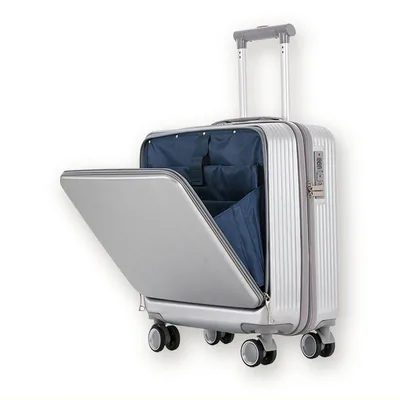
Built-in locks on suitcases are often treated as part of the case design, so buyers sometimes forget to ask the same questions. The risk is the same. If the case is sold as having a TSA lock, the lock component should be licensed and the pack or hangtag should follow the allowed wording.
For suitcases and luggage sets, the lock claim should be checked together with shell material, wheels, handles, lining, carton data and labels. If you are buying a range, do not assume that every size uses the same lock. Cabin, medium and large cases may use different components, especially when ranges are sourced over several seasons.
Keep an approved sample with the final lock, logo plate, inner label and packaging. That sample becomes the reference for pre-shipment inspection.
9. How VoyagiQ handles TSA lock projects
VoyagiQ is B2B only. We supply European businesses, including travel shops, luggage shops, airport and station retail, online sellers, brands, promo agencies, hotels, tour operators and distributors. Our catalogue covers 440+ travel-accessory products, including locks, luggage tags, packing organisers, travel bags, adapters, neck pillows and amenity items.
For TSA-related lock projects, our process is direct:
- you send the lock type, target retail channel, branding needs and markets of sale;
- we confirm whether you need a licensed product or a neutral combination lock;
- we check the manufacturer’s licence position for the selected model;
- we prepare pack wording, labelling and importer data accordingly;
- we arrange sampling, production, quality control, import, customs and delivery.
We act as EU importer where we supply the goods. Our quality and compliance work is category-specific, so a luggage lock is not treated like a power bank, textile item or toiletry bottle. Each product type has its own practical checks.
10. The simple rule for buyers
If you cannot confirm the licence, do not print the TSA claim. Sell the item as a combination lock and keep the copy clean. If the TSA wording is important for the channel, buy a lock with a confirmed licensed mechanism and approve the artwork only after that confirmation.
This rule protects margin as well as compliance. Reprinting packaging, editing marketplace listings or replacing stock costs more than checking the claim at the start. If you need a lock range, built-in suitcase locks or a private-label travel-accessory line, send us the specification and we will quote the safe route for your markets.